
Inhaltsverzeichnis
- 1 Linseed oil: delicious, healthy and versatile
- 2 Application and Effect
- 3 Special properties of linseed oil
- 4 Origin and production
- 5 Minerals and vitamins
- 6 constituents
- 7 effect
- 8 Dosage and application
- 9 Side effects of flaxseed
- 10 Studies on linseed oil
- 11 Linseed in the kitchen
- 12 Buying and storing linseed oil
- 13 bottom line
- 14 Reference to the studies:
Linseed oil: delicious, healthy and versatile
Linseed oil has been considered one of the healthiest oils for many centuries. The reason for this lies primarily in the valuable and healthy composition of nutrients and fatty acids. Linseed oil is seen meanwhile by many naturopathic practitioners and nourishing scientists as valuable component for a balanced nutrition and also physicians are increased convinced of the positive effect of the vegetable oil. In this article we have compiled all the important information on linseed and linseed oil for you.
Application and Effect
Linseed oil has been proven to have been used in the Middle Ages and antiquity to treat many physical ailments. In the 15th century numerous famous painters discovered the high-quality oil and used it from then on for the production of oil paints.

Today we use linseed oil in many different forms and in numerous areas of daily life. Whether in the kitchen, for medical purposes, in industry or in trade – linseed oil is an important component in many products.
However, the oil is particularly outstanding for its health benefits, which have an extremely positive effect on the entire cardiovascular system as well as on the bones and joints. Last but not least, linseed oil has an excellent taste and is even very popular as an impregnation for wood – a true all-rounder that should not be missing in any household.
Special properties of linseed oil
Linseed oil is produced from linseed and has long been considered one of the most valuable vegetable oils in the kitchen. The Latin name is Linum usitatissimum. The oil can be used excellently in the kitchen, in order to To prepare food. Its nutty, slightly bitter taste makes it ideal for refining salads, among other things. In the past, people already appreciated the many advantages of Linum usitatissimum and so it was increasingly used in the kitchen, but also for the production of cosmetics.
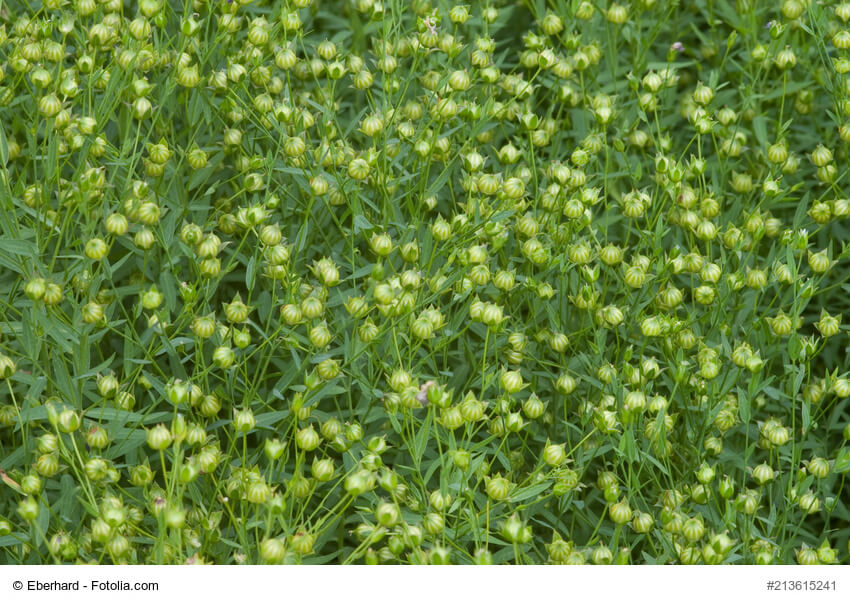 Linum usitatissimum oil is extremely rich in omega-3 fatty acids and is therefore ideal for supplementing your diet in a balanced way. The positive properties that can be attributed to omega-3 fatty acids are well known:
– They are the first choice for cardiovascular diseases.
– They have a positive effect on vision.
– They strengthen the brain.
– They help you to remain able to concentrate.
In addition, Linum usitatissimum oil contains a whole range of other healthy ingredients. This healthy mix also has a positive effect on blood fat values and significantly improves cholesterol levels. Linseed oil is therefore often used as an alternative treatment method to lower the cholesterol level sustainably under medical supervision.
Diabetes is another disease that can be controlled or prevented by linseed oil, so that people who are already ill can drastically reduce the amount of insulin they need. Taking the oil can also lower blood pressure in the long term.
It is also particularly recommended for allergy sufferers, as it helps to strengthen the immune system of the mucous membranes.
The results from all previous studies and tests have been extremely positive. Thus linseed oil seems to be a true all-rounder.
Origin and production
There are different types of Linum usitatissimum oil. Will The oil, which is obtained by the cold pressing process, is considered to be of particularly high quality because only low temperatures were used in the production process, so that the characteristic properties have been retained and the constituents have only been gently dissolved. The suspended particles are then removed from the pure oil obtained. This makes it ideal for raw consumption or for pharmaceutical purposes.
Often linseed oils with the designation “Oxyguard” or “omega safe” can also be found. These are also oils obtained by cold pressing. However, the oil was produced here under a protective atmosphere. This is to prevent the contact of the oil with the air, so that the durability increases.
In the craft sector, an oil is used which is obtained by so-called hot pressing, because it still contains a lot of mucilage and suspended particles. Refined oil is also used exclusively in crafts, since chemical solvents were used after extraction to separate the pure oil from the filtrate. In both processes, valuable ingredients are lost, so it is no longer recommended for our diet.
 Minerals and vitamins
 Minerals and vitamins
The numerous minerals and vitamins in Linum usitatissimum oil are extremely beneficial to our health. It contains a lot of lecithin, protein, cadmium and linamarin (about 20 percent). In addition to the valuable provitamin A, vitamins C, D, E and K as well as B1, B2 and B6 are also contained. Other important ingredients are sterols, pantothenic acid, folic acid and nicotinic acid. Also the trace elements contained in the oil (iron, calcium, potassium, calcium, zinc, magnesium, iodine, sodium, copper) and Minerals are of enormous importance for our nutrition.
In order for unsaturated fatty acids to have a positive effect on health, 40 to 50 g of linseed is sufficient to cover the daily requirement of an adult. Of all known vegetable oils, Linum usitatissimum oil has the highest concentration of omega-3 fatty acids. The content of these important fatty acids can be up to ten times higher than in fish oil.
constituents
The many ingredients in Linum usitatissimum oil can significantly influence our well-being. The composition of the omega-3 fatty acids contained in the oil may vary depending on the area where the linseed is grown. For example, the oil can…
- contain 10 % saturated fatty acids (e.g. palmitic acid, stearic acid) and 18 % monounsaturated fatty acids
- 72 % polyunsaturated fatty acids (e.g. oleic acid, omega-6- and omega-3-linolenic acid) contain
In addition, the polyunsaturated fatty acids can also contain about 12 – 24 % omega-6 linoleic acid and 45 – 70 % omega-3 fatty acid alpha linolenic acid. Only black cumin oil, whose positive health effect has also been researched in numerous studies, has a similarly high proportion. Many similarities could be found in the effects of the two oils, which is due to the high proportions of fatty acids.
effect
The high content of fatty acids in the vegetable oil supports the transport of the nerve impulses and also contributes to the fact that the nerves are less strongly damaged. Linseed oil can therefore both influence the nervous system through these nutritional properties and support the treatment of diseases.
The fatty acids also serve to form nerve cells in the body, which is particularly important for our brain. Children and adolescents need omega-3 fatty acids, for example, so that their nerve cell network can develop properly.
From a medical point of view, linseed oil can basically help with a whole range of diseases:
1. it prevents arteriosclerosis (calcification of the arteries), because the alpha-lineolenic acids it contains in particular have an inhibitory effect on these inflammatory processes in the body.
2. arthrosis symptoms can also be alleviated.
3. it can avoid diabetes because it weakens the blood sugar levels after eating. An elevated blood sugar level is considered a major risk factor for the development of diabetes.
4. linseed oil can alleviate the symptoms of Rhema.
5. the nutrients contained in the vegetable oil have a strong anti-inflammatory effect so that the risk of arthritis can be reduced.
The omega-3 fatty acids in the oil can regulate blood pressure.
7. it can protect against heart attacks, because it strengthens the cardiovascular system by ensuring that our body is continuously supplied with nutrients or energy, and at the same time the waste products produced by the metabolism are transported away.
8. in the case of phlebitis or varicose veins and phlebitis, because regular intake of omega-3 fatty acids significantly improves blood flow.
9. it protects against a stroke, because it leads to a dilution of the blood, so that it can flow again unhindered to our brain.
10 Last but not least, the oil can lower the LDL cholesterol level and thus prevent serious secondary diseases.
Dosage and application
What applies to most medicinal plants and foods also applies to linseed oil: only in the right dosage can it be also be conducive to health. On the other hand, too high a dose can even harm our body.
The critical dose is about 100 grams of oil per day. It is unlikely that any human being would have the idea to consume such a large amount of it, which is why a possible overdose is considered rather unlikely. However, since everyone reacts differently and the omega-3 fatty acids ensure that our blood is diluted, you should not consume more than 3 tablespoons of Linum usitatissimum oil per day.
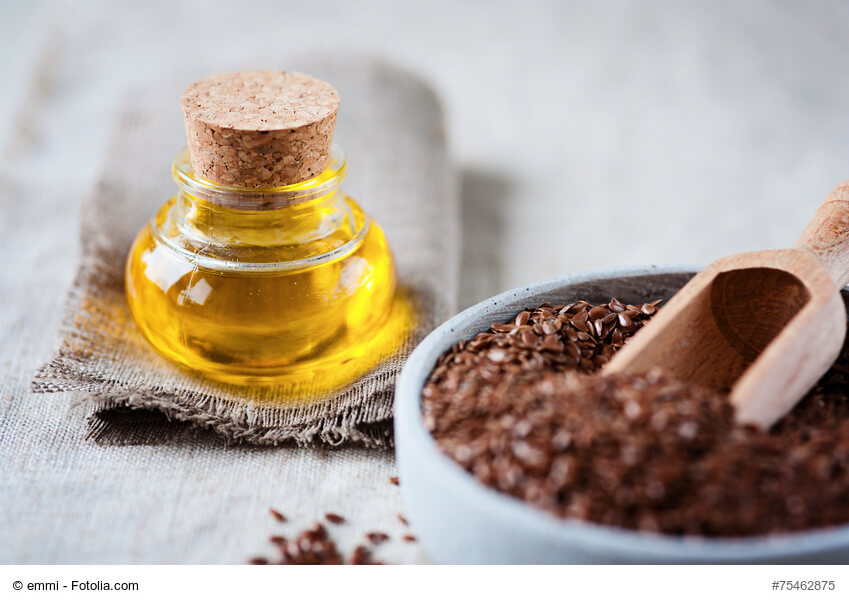
You can cover your need for fatty acids in different ways. Either you take the oil by the spoonful – best in the morning before breakfast – or you choose linseed oil capsules. Two capsules are taken daily with a little water. However, you can also simply add the high-quality vegetable oil to cold dishes: 1 – 2 tablespoons in your smoothie, over the salad or to refine vegetables and potatoes (after the cooking process) already work wonders here.
Side effects of flaxseed
Linum usitatissimum is one of the healthiest oils due to its nutrient composition. Nevertheless, it can also become a health hazard in three ways:
1. health hazard due to oxidation?
The oxidative process of contact with oxygen caused by frequent and prolonged opening, long storage or incorrect storage can pose a risk to our health. The oil is then inedible and becomes rancid, which can have negative effects on the stomach, digestion and overall health. You should therefore always make sure that the oil is in first-class condition before use.
2. is an overdose possible?
Those who overdose the oil daily risk their health. One The daily tablespoon of oil is perfectly sufficient to meet the need for Omega 3 and 6 fatty acids as a supplement to a healthy diet. If you are not sure what the correct dosage should be in your case, you can ask your family doctor for medical advice.
3. cadmium levels too high?
Under no circumstances should you buy cheap, poorly processed oil, as products from conventional cultivation in particular can have an increased cadmium load. It is a harmful heavy metal which is primarily used for fertilising the soil.
Studies on linseed oil
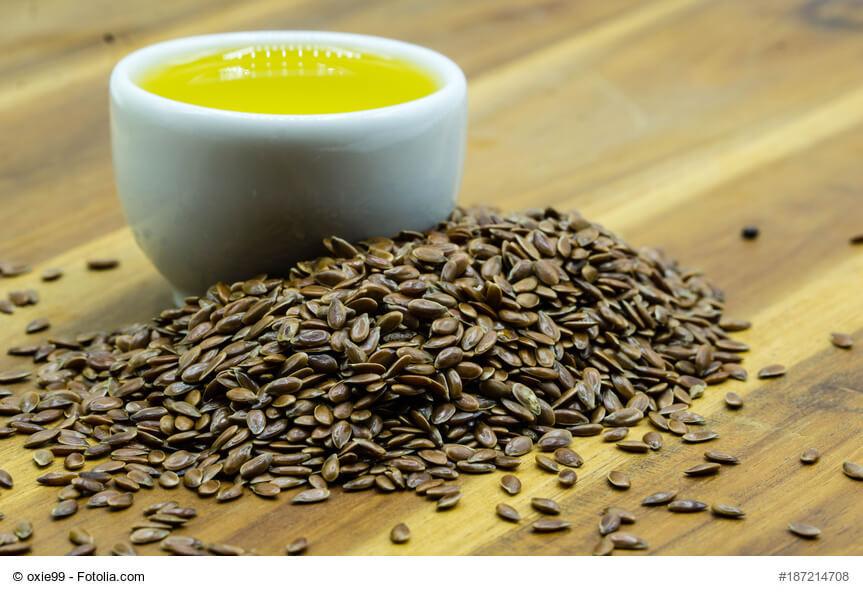
On the Internet you can find a lot of information about scientific studies about linseed oil. These are not only research results from Europe, but internationally the science deals with the characteristics and the health advantages of linseed oil. Many results also provide information about the exact ingredients, such as the study conducted by the Institute of Cardiovascular Science at the University of Manitoba, Canada. Not only the active substances are listed, but also the Omega 3 fatty acid is mentioned very strongly. It was found that Linum usitatissimum oil is particularly helpful in combating bad (LDL) cholesterol. If the cholesterol level is lowered, this also has a positive effect on the human heart. This helps to prevent heart attacks, since linseed oil does not cause the blood vessels to become fatty due to bad cholesterol. In addition, the researchers also describe the anti-inflammatory properties of linseed as well as the preventive effect against various diseases.
Furthermore, many articles are also published on medical online guides on the Internet. Who would like to read through such an article, does not have to search usually long. A particularly interesting article, for example, comes from the University of Maryland, USA. The report was published in full on the homepage of the university and deals with various studies on linseed and oil. The positive effects on the cardiovascular system and the cholesterol level are confirmed here.
The positive effect for menopausal women is also mentioned in the study: 40 grams of flax seed per day are said to cause a drastic difference in symptoms such as hot flushes and mood swings. However, this has not yet been clearly confirmed. In order to be able to prove the effect in the menopause, further research is therefore necessary.
The studies dealing with the health benefits of Linum usitatissimum oil for cancer patients are certainly not uninteresting either. A research result on breast cancer, for example, stated that taking flax seed not only reduces the risk of breast cancer, but also prevents the growth of tumours. Further results are expected in the near future. In animal experiments, the effect of Linum usitatissimum oil was also tested in colorectal cancer and prostate cancer. It was also found in both clinical pictures that the consumption of linseed or oil kills cancer cells. Reference below.
Linseed in the kitchen
Linseed oil is one of the most valuable vegetable oils in the kitchen because it is particularly rich in Omega 3 fatty acids. Therefore, one tablespoon of the oil a day is sufficient to meet the daily requirement for omega-3 fatty acids. to cover up.
Basically you should not heat the oil. It is therefore ideal for refining and garnishing cold dishes. The nutty taste of linseed oil goes particularly well with fresh leaf salads, as well as with sprouts. In addition, the high-quality vegetable oil can simply be stirred under the dressing. The high-quality oil also goes well with warm potato dishes. In the Spreewald and Lausitz, for example, boiled potatoes with cream ring or quark are refined with linseed oil.
Buying and storing linseed oil
Linseed oil should always be produced in high quality, because this is the only way it can develop its full effect naturally. Due to the unsaturated fatty acids contained in Linum usitatissimum, the vegetable oil is very sensitive to air and oxidizes quickly. If it comes into contact with air or light, it turns rancid after a very short time and the peptide which forms it also gives it a bitter taste. Ideally, the oil should be stored in dark glass bottles with a sell-by date. The bottle must always be closed tightly after use. As a rule, the oil can be used for about two months from the date of manufacture.
It is therefore not advisable to buy in stock, but the vegetable oil should always be consumed as soon as possible. Keep the bottle dry, dark and cool, preferably in the refrigerator.
bottom line
It can be beneficial for your health to take one tablespoon of linseed oil a day. Under certain circumstances even diseases can be prevented by taking it. Nevertheless, vegetable oil is of course not a panacea. If you attach great importance to a balanced, healthy diet and are looking for a healthy supplement, both flaxseed and flaxseed oil can be recommended to you. Thus you supplement your nutrition by a high portion of Ballast and digestive substances, as well as a balanced mix of vitamins and minerals.
Reference to the studies:
Avelino, Ana Paula A.; Oliveira, Gláucia M. M.; Ferreira, Célia C. D.; Luiz, Ronir R.; Rosa, Glorimar (2015): Additive effect of linseed oil supplementation on the lipid profiles of older adults. In: Clinical interventions in aging 10, pp. 1679-1685. DOI: 10.2147/CIA.S75538.
Han, Hao; Qiu, Fubin; Zhao, Haifeng; Tang, Haiying; Li, Xiuhua; Shi, Dongxing (2017): Dietary Flaxseed Oil Prevents Western Type Diet-Induced Nonalcoholic Fatty Liver Disease in Apolipoprotein-E Knockout Mice Knockout. In: Oxidative medicine and cellular longevity 2017, p. 3256241. DOI: 10,1155/2017/3256241.
Hashempur, Mohammad Hashem; Homayouni, Kaynoosh; Ashraf, Alireza; Salehi, Alireza; Taghizadeh, Mohsen; Heydari, Mojtaba (2014): Effect of Linum usitatissimum L. (linseed) oil on mild and moderate carpal tunnel syndrome. A randomized, double-blind, placebo-controlled clinical trial. In: Daru : journal of Faculty of Pharmacy, Tehran University of Medical Sciences 22, p. 43. DOI: 10.1186/2008-2231-22-43.
Goyal, Ankit; Sharma, Vivek; Upadhyay, Neelam; Gill, Sandeep; Sihag, Manvesh (2014): Flax and flaxseed oil. An ancient medicine & modern functional food. In: Journal of food science and technology 51 (9), p. 1633-1653. DOI: 10,1007/s13197-013-1247-9.
Yang, Wei; Fu, Juan; Yu, Miao; Huang, Qingde; Di Wang; Xu, Jiqu et al. (2012): Effects of flaxseed oil on anti-oxidative system and membrane deformation of human peripheral blood erythrocytes in high glucose level. In: Lipids in Health and Disease 11, p. 88. DOI: 10.1186/1476-511X-11-88.